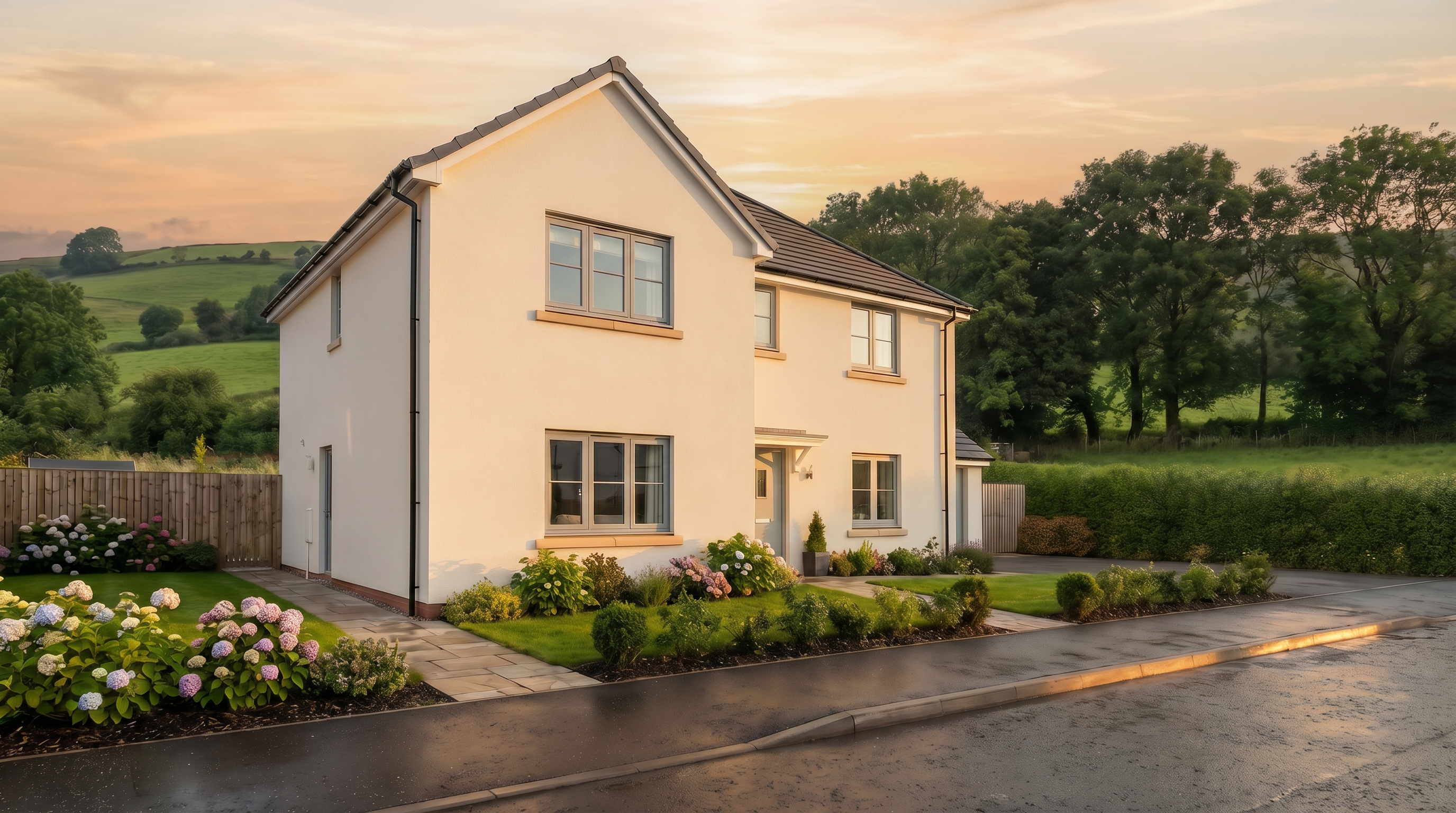
If you are considering external wall insulation, one of the most natural questions is whether the money comes back when you eventually sell. It is a sensible question, because this is not a cosmetic impulse purchase. It is a significant upgrade to the performance and appearance of the property.
The honest answer is that external wall insulation can increase property value, but usually not in a simple pound-for-pound way. The value tends to show up through a mix of stronger EPC performance, lower running costs, better kerb appeal, broader buyer confidence, and in some cases a quicker or smoother sale.
That means homeowners should think about value realistically. The uplift can be meaningful, but it normally works best as part of a wider package of benefits rather than as a guaranteed resale arbitrage play.
Why value conversations now matter more than before.
Energy performance has become much more visible in the property market. Buyers notice running costs more readily, listings display EPC data more clearly, and inefficient homes increasingly raise questions that efficient homes avoid.
- A stronger EPC can make a property feel less risky to buyers.
- Lower projected running costs support the overall sales story.
- Better efficiency helps a house feel more future-ready as standards tighten.
External wall insulation can therefore influence value even before a buyer starts negotiating on price. It can change the first impression, the sense of likely running costs, and the perceived amount of future work the property still needs.
What external wall insulation tends to improve.
The value effect does not come from a single feature. It comes from several improvements working together. A house that is warmer, looks fresher, and performs better on paper is usually easier to market than one that feels cold, tired, and costly to run.
EPC improvement
On the right property, external wall insulation can improve the EPC meaningfully. That matters not only because buyers see the rating, but because it acts as a shorthand for efficiency, future bills, and regulatory resilience.
Buyer confidence
A house with obvious efficiency upgrades can feel easier to buy. Instead of inheriting a known problem, the buyer sees that major work has already been addressed. That can reduce hesitancy and limit the temptation to negotiate hard on expected future improvement costs.
Appearance and kerb appeal
External wall insulation often transforms appearance as well as performance. A tired exterior can become clean, modern, and cohesive. In real property markets, that visual improvement matters because better-looking homes photograph better, attract more interest, and can set a stronger tone from the first viewing onward.
The realistic view on direct value add.
This is where honesty matters. External wall insulation may add value, but homeowners should be cautious about expecting a full recovery of the installation cost in resale price alone. Buyers do not usually isolate the insulation and reward it line by line. They respond to the whole property package.
- A stronger sale price is possible, but not guaranteed at the full project cost.
- A quicker sale or fewer negotiations can also be part of the return.
- The longer you live in the home, the more the value case improves because you also enjoy the running-cost savings and comfort gains.
For that reason, the best frame is usually not “will I get every pound back?” but “does this make the property stronger while also improving my own experience of living in it?”
When external wall insulation adds the most value.
The strongest uplift usually appears where the property had obvious room for improvement beforehand. If the home started cold, visually tired, or poorly rated on efficiency, the contrast after the work can be substantial.
- Homes with weak EPC ratings often have more headroom for visible improvement.
- Older houses with dated or weathered exteriors can benefit strongly from the visual transformation.
- Markets where buyers are cost-conscious or energy-aware tend to reward efficient homes more clearly.
- Slower markets often make efficiency and presentation stronger differentiators.
When the uplift may be more limited.
The effect can be smaller where the house was already reasonably efficient, already presented well externally, or sits in a market where almost everything sells quickly regardless of performance. In those situations, external wall insulation may still be worthwhile overall, but the resale story may be less dramatic.
- Properties already near the stronger end of EPC performance have less room to move.
- A home that already looks excellent externally may gain less visible kerb-appeal value.
- Very short ownership periods reduce the chance to enjoy savings before sale.
Why timescale changes the answer.
Length of ownership makes a major difference. If you sell very quickly after the work, you rely heavily on resale uplift alone. If you stay for years, you gain the lower bills, the better comfort, the reduced condensation risk, and then any added resale strength later on top of that.
- Short-term ownership makes the financial case more dependent on market response.
- Medium-term ownership allows value uplift and energy savings to work together.
- Long-term ownership usually produces the strongest overall outcome.
How it compares with other improvements.
External wall insulation is unusual because it sits between appearance improvement and performance improvement. A new kitchen may be more obviously saleable, but it does not lower future bills. A loft conversion may add a bedroom, but it comes at much higher cost. External wall insulation rarely tops the list for pure resale return, yet it continues paying back through efficiency while you live there.
The best way to think about property value.
The healthiest mindset is to treat property-value uplift as a bonus rather than the only justification. If you insulate the house, enjoy the comfort and savings for years, and later find the home easier to sell and somewhat more valuable, that is a strong outcome. If you do it purely hoping for a rapid resale profit, disappointment is more likely.
In other words, external wall insulation usually supports value best when it is chosen for the right living reasons first and the resale benefit second.
Our honest recommendation.
Yes, external wall insulation can increase property value. But the more honest answer is that it usually improves the market strength of the house rather than delivering a guaranteed direct payback in sale price alone. That distinction matters, because it keeps expectations sensible and helps homeowners judge the work properly.
If the home is cold, inefficient, visually dated, and likely to remain yours for a number of years, the value case is usually very strong overall. If you are selling almost immediately and care only about direct resale uplift, the answer is less certain.
What to do next if value is your concern.
The practical next step is to assess your actual property. The likely EPC improvement, the current exterior condition, the local market context, and how long you expect to stay all shape the answer. That is far more useful than relying on a generic promise that insulation always adds a fixed amount of value.
A good survey can help you weigh the value question alongside comfort, cost, and specification so you can judge the upgrade properly in the context of your own house.
Keep researching this topic
Browse the wider archive before you make a decision.
Good blog content should narrow the question, not trap you on one page. Use the archive and category views to compare neighbouring guides, then move into service and proof pages once the direction becomes clearer.
After cost research, compare the real routes
Do not stop at price ranges. Use the service, proof, and survey pages to work out what is actually right for your house.
Cost-led readers are usually close to making a decision. The most helpful next step is to compare services clearly, then validate the likely route against real work and a property-specific survey.
Visit the external wall service page
If your questions are mainly about solid walls, rendering, finish, and deeper retrofit value, start here.
Check proof before you commit
Use real project pages to understand what finished work looks like and how homeowners judge the result beyond price alone.
Get a survey for your own property
The real answer depends on wall type, access, detailing, and what already exists on the house. The survey turns research into an informed decision.
Explore the wider journey
Useful next pages once the article makes sense.
Rockwarm now has a fuller service, proof, FAQ, and local-search structure. These pages help move from general education into comparison, reassurance, and a more confident commercial next step.
Compare the three main insulation routes side by side before choosing the wrong first spend.
See longer-form proof showing how service choice, property type, and finished outcomes fit together.
Read homeowner feedback and trust signals.
Check coverage across Coventry, Nuneaton, Birmingham, and the wider Midlands.
Free survey
Ready to move from reading to a real recommendation?
Guides can explain the possibilities, but they cannot confirm exactly what your own property needs. If you want advice based on the actual walls, loft, layout, and condition of your home, book a free survey and we will point you toward the most suitable next step, including when a simpler route makes more sense than a larger project.